Metric vs Imperial: A Practical Guide for Users of Free Online Tools
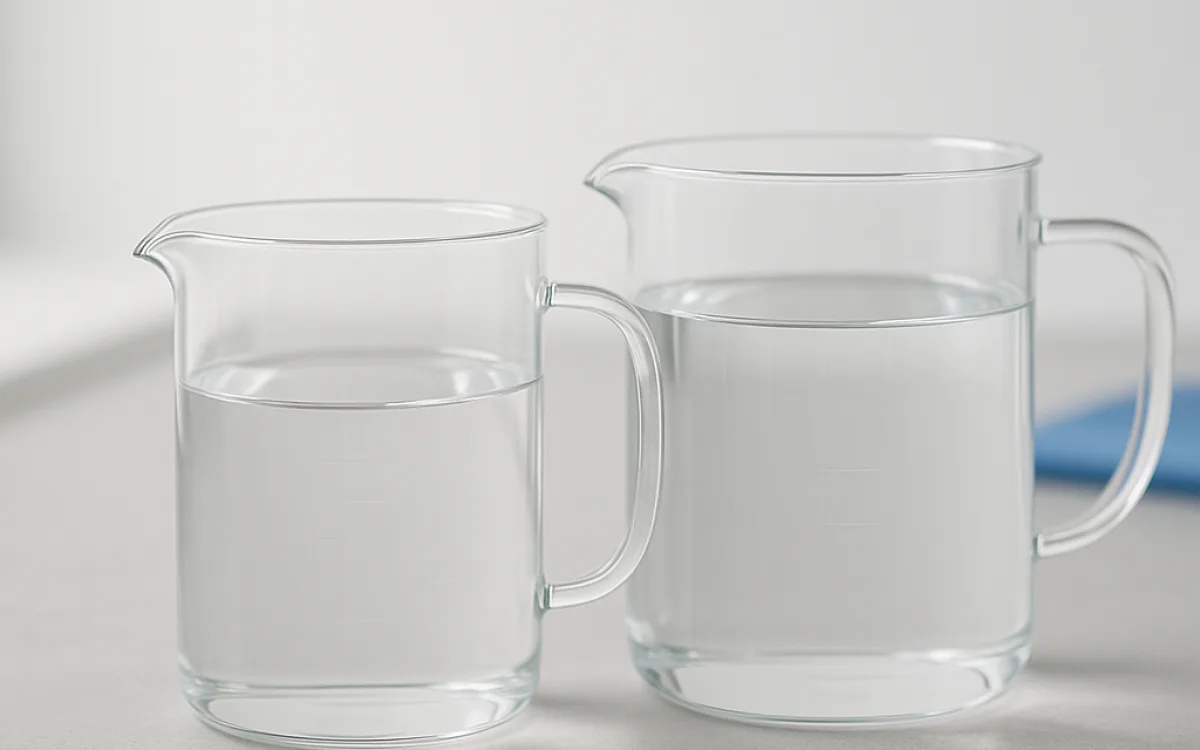
A ‘gallon’ in Boston is not the same as a ‘gallon’ in Birmingham. The names match, but the volumes differ by twenty per cent, and the same trap waits inside pints, fluid ounces and tons. Free online tools convert these in seconds, yet they cannot tell you which system the original figure used. That is the user's job, and it is where costly errors start.
This guide compares metric and imperial units that share a name but not a size. It includes a quick-reference table, explains the Mars Climate Orbiter as the textbook cost of mixing systems, and gives a rule for what to do when a source does not say whether it means US customary, imperial or metric units.
The Name Game: Why Shared Labels Hide Different Sizes#
The metric system is not the danger. The danger is the set of imperial and US customary units that borrowed the same words and then quietly changed the quantities. A US fluid ounce is roughly four per cent larger than an imperial fluid ounce, yet a US pint is twenty per cent smaller than an imperial pint because the US uses sixteen fluid ounces per pint while the UK uses twenty. Free online tools will convert any of these accurately once you pick the right system, but they assume you already know which system you are looking at. Many people do not.
Same Name, Different Size: A Quick-Reference Table#
| Unit name | US customary | Imperial / metric |
|---|---|---|
| Gallon | 3.785 litres | 4.546 litres (imperial) |
| Quart | 0.946 litres | 1.136 litres (imperial) |
| Pint | 0.473 litres | 0.568 litres (imperial) |
| Fluid ounce | 29.57 ml | 28.41 ml (imperial) |
| Ton | 907.18 kg (short ton) | 1,016 kg (long ton) / 1,000 kg (tonne) |
| Hundredweight | 45.36 kg (short cwt) | 50.80 kg (long cwt) |
| Cup | 240 ml (legal US cup) | 250 ml (metric cup, Australia) |
The differences are not rounding errors; they are separate definitions that happen to share a name.
Liquid Measures: The US Gallon Is Not the Imperial Gallon#
Most recipe disasters and fuel-economy confusions come from liquid units. The US gallon is defined as 231 cubic inches, while the imperial gallon is defined as the volume of ten pounds of water at a specified temperature. That difference makes the imperial gallon about 1.2 times the US gallon. A British pint of beer is therefore larger than an American pint, but a British fluid ounce is smaller than an American fluid ounce. The arithmetic is consistent once you know the starting point; the problem is that labels rarely say which starting point they used.
- A US pint is 473 ml; an imperial pint is 568 ml.
- A US fluid ounce is 29.6 ml; an imperial fluid ounce is 28.4 ml.
- US recipes usually measure by volume, not weight, so a ‘cup’ of flour can vary by density.
- Fuel economy in miles per gallon cannot be compared across the Atlantic unless you know which gallon.
- Paint, resin and adhesive data sheets may list coverage per gallon without stating the system.
Weight: Short Ton, Long Ton and Tonne#
The word ‘ton’ is even more slippery. The US short ton is 2,000 pounds, the British long ton is 2,240 pounds, and the metric tonne is 1,000 kilograms. A shipping quote that ignores the difference can be ten per cent out on freight costs or customs duty. The hundredweight follows the same split: a US hundredweight is 100 pounds, while an imperial hundredweight is 112 pounds, which is why an imperial ton contains twenty hundredweight and a US ton contains twenty. Free online tools handle these conversions, but only if you select the correct ton before pressing convert.
| Unit | US customary | Imperial / metric |
|---|---|---|
| Ton | 907.18 kg (2,000 lb) | 1,016 kg (2,240 lb) / 1,000 kg (tonne) |
| Hundredweight | 45.36 kg (100 lb) | 50.80 kg (112 lb) |
| Pound | 0.4536 kg | 0.4536 kg (same) |
| Ounce (mass) | 28.35 g | 28.35 g (same) |
The avoirdupois pound and ounce are identical in both systems; only the ton and hundredweight diverge.
The Mars Climate Orbiter: What Mixing Systems Cost#
The most famous price tag for a unit mix-up is NASA's Mars Climate Orbiter. In 1999, one team sent thrust data in pound-seconds, while another team read it as newton-seconds. The ratio between those units is roughly 4.45, so the spacecraft's trajectory was off by that factor. The probe entered the Martian atmosphere too low and was destroyed. The mission cost around $125 million, or roughly €115–€135 million at contemporary exchange rates. It is the example every engineering course uses because the failure was not a calculation error; it was a metadata error. The numbers were right, but the label on the numbers was wrong.
The same failure mode still appears today in spreadsheets, CAD files and shipping manifests.
A Rule for Sources That Do Not Say Which System They Used#
When a source gives a number but not a system, the safest assumption is not the one closest to your own country. The safest assumption is that you do not know. Start with the context: a 1990s British cookbook will use imperial pints, an American brewery will use US pints, and a European technical drawing will use metric. If the source is ambiguous, convert both possibilities and compare them against a physical limit. A twenty-litre result and a twenty-gallon result cannot both fit in the same tank.
- Look for a country, date or standard reference on the source.
- If none appears, convert both US customary and imperial versions.
- Check the result against a physical limit, cost or known weight.
- Record which system you assumed, so the next person can check it.
- For contracts, engineering or medicine, insist on written confirmation.
When Free Online Tools Help, and When They Do Not#
Browser-based converters are excellent for one-off checks when the source system is known. They are fast, need no installation and leave no data on a server if they run entirely client-side. The five tools on siteb.biz, for example, process everything in the browser. However, a free online tool is the wrong choice for repeated business calculations, regulated work or any figure where a mistake could cost money or safety. In those cases, a spreadsheet with locked cells, a native unit-conversion app or a qualified professional is the better investment. The tool converts; the user still owns the judgement.
- Use a browser converter for quick recipe scaling, travel fuel checks or luggage weight estimates.
- Use a spreadsheet with documented formulas for repeated quotes, invoices or inventory.
- Use a native app when you are offline or need audit trails.
- Consult a professional for customs declarations, engineering specs or medical dosing.
- Never treat a converted figure as legal, financial or medical advice on its own.
Final Check: Treat the Unit as Part of the Number#
The only reliable way to avoid these traps is to treat the unit as part of the number, not as decoration. Write ‘5 US gal’ or ‘5 imp gal’ rather than ‘5 gal’. Store the unit beside the value in every spreadsheet cell. Ask the supplier, the author or the lab which system they used. Free online tools will then give you a clean conversion; without that label, they can only give you a guess.
Frequently asked questions
Is a US pint the same as a UK pint?
No. A US pint is 473 millilitres, while an imperial pint is 568 millilitres, so the UK pint is roughly twenty per cent larger. The confusion exists because both systems use sixteen fluid ounces in some contexts, but the US fluid ounce is 29.6 millilitres and the imperial fluid ounce is 28.4 millilitres, while the US pint contains sixteen US fluid ounces and the imperial pint contains twenty imperial fluid ounces. When you see ‘pint’ on a label, recipe or data sheet, you need to know the country of origin before converting. Free online tools can do the arithmetic once you select the correct system, but they cannot guess which pint the original author meant.
Why did the Mars Climate Orbiter fail?
The orbiter failed because two engineering teams used different force units without realising it. Lockheed Martin provided thruster performance in pound-seconds, while NASA's navigation team expected newton-seconds. A pound-second is about 4.45 newton-seconds, so the calculated trajectory was wrong by that factor. The spacecraft approached Mars at the wrong angle and burned up in the atmosphere. The direct mission cost was about $125 million, or roughly €115–€135 million at the exchange rates of the late 1990s. The lesson is that the numbers themselves were calculated correctly; the disaster came from the missing label that should have identified the unit system.
When should I avoid free online unit converters?
Avoid browser-based converters for any calculation where a mistake could have legal, financial, safety or medical consequences. They are fine for quick personal checks, but they offer no audit trail, no guarantee of accuracy and no professional accountability. For repeated business use, a spreadsheet with locked formulas or a certified native app is more reliable. For customs, engineering, aviation or medical dosing, use the system mandated by the regulator and confirm the unit system in writing. Free online tools are a convenience, not a substitute for professional judgement, documented processes or advice from a qualified expert.
metric vs imperialUS gallon vs imperial gallonconvert US pint to UK pintMars Climate Orbiter unit errorfree online unit convertershort ton vs long ton vs tonne